When we think about body dysmorphia, the focus tends to be on weight, and it’s often associated with eating disorders like anorexia or bulimia. But the reality is that body dysmorphia can centre on any part of the body. And even without the presence of an eating disorder, it can be utterly debilitating.
While anyone can be affected, it’s actually really common among autistic people. A big part of that is how we process visual information. Many of us naturally focus on the details rather than the whole, so when we look in the mirror, we don’t necessarily see a complete face. We see eyebrows. Noses. Chins. All as separate things, pulled apart and scrutinised individually. Add obsessive-compulsive tendencies, intrusive thoughts, societal pressures, and the anxiety that comes with being perceived differently, and it’s no wonder so many of us struggle with how we look.
This has been my life since I was a teenager. I’ve had a deep hatred of my own face for as long as I can remember. It might sound extreme, but that’s the reality of body dysmorphia. It’s irrational, it’s relentless, and it doesn’t just go away.
As I mentioned in my previous post, RSD and me – trying to function when everything feels like rejection, I’ve been dealing with body dysmorphia for more than 20 years. I thought that fixing the things I hated about myself would solve it, but instead, I just found new things to obsess over.
It started with my nose, after one of my brothers made a throwaway comment about it being bent. I hadn’t even noticed it before, and I know he wasn’t trying to be hurtful. But it still stuck with me. It also brought back another memory, when my other brother, who absolutely did mean to be hurtful, referred to me as an “ugly little thing” in front of his now-wife when I was still a child. And then there was the random man in a club when I was in my 20s who came up to me just to say I was the ugliest woman he’d ever seen in his entire life. These are only a few of the things people have said about how I look, but they’ve stayed with me. Even writing about them now makes me tear up.
Years later, when I received some inheritance money from my nan, I finally had surgery to straighten my nose. I spent £5,000 on the procedure.
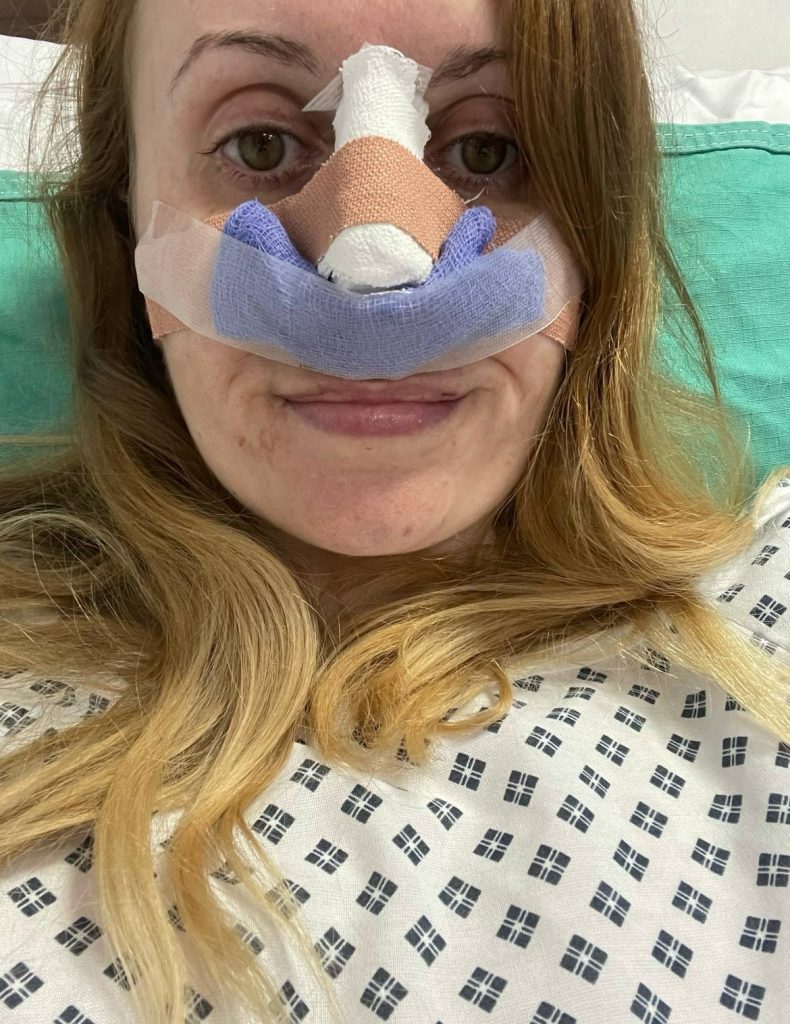
And while I’m now happier with how my nose looks (though there’s more I’d do if money weren’t an issue), I immediately shifted my focus to something else: my teeth.
They were never particularly crooked, but they weren’t perfectly straight either. And once I stopped obsessing over my nose, I started obsessing over them instead. So during lockdown, I ended up getting braces. Big metal ones that gave me ulcers and stopped me from eating certain foods. I looked like Katy Perry in the Last Friday Night music video. But after about nine months, the braces came off, and I was finally happier with my teeth.
Of course, it didn’t stop there. These days, my attention has turned to the lines on my face. When I can afford it, I get Botox on my crow’s feet, forehead and frown lines. I’d get it more often if I could. But even when I’ve had it done, it’s not long before I start fixating on the lines around my mouth. I know it’s irrational. I know I’m 36, and it’s completely normal to have wrinkles. But that doesn’t stop me from hating them.
For most of my adult life, I’ve avoided having my photo taken unless I’ve taken 300 myself and chosen one or two I don’t completely hate (and usually end up hating them later anyway). Even talking face-to-face with people is uncomfortable because I’m convinced they’re looking at my features and judging me. It’s a big part of why I hate making eye contact. If I’m looking at someone, they’re looking at me. And if they’re looking at me, they’re seeing all the things I hate about myself and thinking I’m unattractive.
What makes it even more frustrating is that I don’t see other people the way I see myself. I genuinely think everyone is beautiful in their own way. I always find myself noticing someone’s hair or smile or skin and thinking how lovely it is. So why can’t I extend that same kindness to myself?
After years of dealing with body dysmorphia and trying to change the things I hate, I know now that no amount of surgery, make-up or fillers will ever be enough. Because the problem isn’t really with my face. It’s with the way I see myself. And until I get proper support, including therapy, I know I’ll keep finding something new to dislike.
Body dysmorphia is exhausting. And when you add in autism, obsessive thought patterns, and a brain that zooms in on every detail, it’s even harder to deal with. But recognising the pattern is a start. And slowly, I’m learning to see myself with a little more compassion, even if it’s just one tiny piece at a time.
I won’t pretend I’m at peace with how I look. I’m really not. But I am trying. I’m trying to challenge those thoughts when they come up. I’m trying to remind myself that just because something feels true doesn’t mean it is. And I’m trying to be gentler with myself, even if that just means not zooming in on every photo I take and ripping myself apart for how I look in it. Because maybe, just maybe, I deserve to take up space in the world without picking myself apart first.